AUW Sun Valley Building, Beverly Hills,
Road#02, Chatteshwari Road, Chattogram


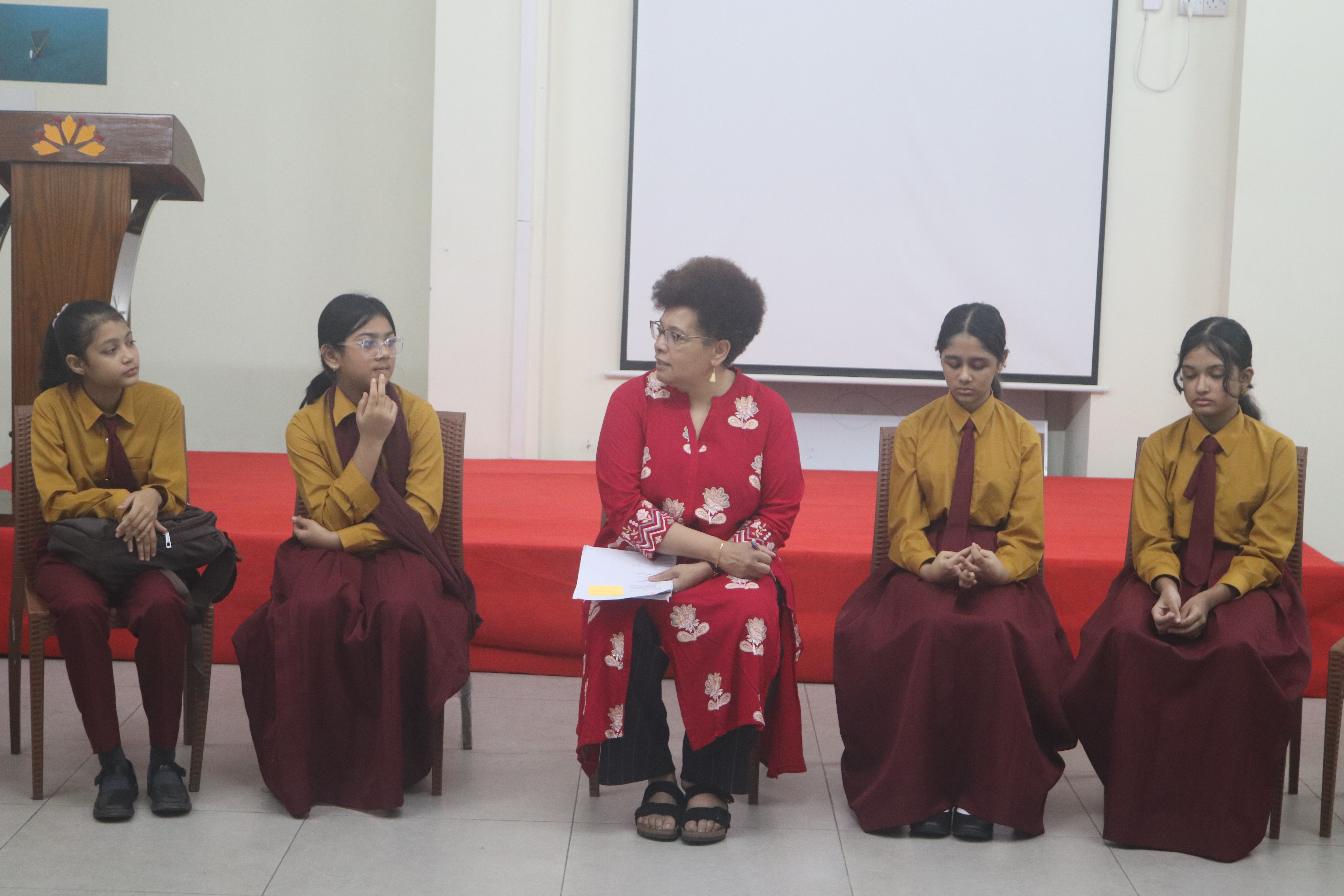
School leaders all too often fail to take into consideration the perspective of students, for whom the education is meant. Moreover, individuals tend to give lip service to student's voice and relegate it to limited areas. We must expand our thinking and possibilities for a wider range of student voices.
Students ought to have a say in their education and learning. The voice of students has traditionally been absent when planning curriculum. However, students learn best when motivated, engaged, and have agency in their learning. The future of education must include student voices in a meaningful and impactful manner. We must develop systems that allow student voices to be embedded in all aspects of the school that affect them.
At the Asian University for Women (AUW) Laboratory School, administrators and teachers provide many opportunities for students to voice their opinions, and concerns and speak confidently about matters that concern them and their education. Firstly, the school meeting is a forum where students participate in direct democracy by voting on issues that impact their learning. Students are encouraged to make motions, speak to motions, and challenge ideas by respectfully questioning what is proposed and by providing alternative perspectives. The Global Café is another forum where students research and present information about global and local issues that impact them and their community. Students discuss relevant topics in pairs, small groups, and in larger forums as their confidence increases. The AUW Laboratory School Public Speaking and Debate Club has a 95% student involvement rate. All three venues offer opportunities for students to present their ideas with clarity, conviction and, confidence.
Hearing from students must not only be relegated to traditional forms like student government but their voices must be heard on all committees and in multiple forums that the school provides. All students, and not just a chosen few, should be able to develop communication and leadership skills. The giving and taking of space and the sharing of power and decision-making must also be introduced so that students learn collaboration and the ability to share decision-making, agency, and responsibility for the greater good.